

A fall can change everything. For an elderly person, what seems like a minor stumble can result in a fractured hip, prolonged hospital admission, loss of independence, and a cascade of health complications. For families across Delhi NCR — caring for parents or grandparents in areas like Paschim Vihar, Janakpuri, Rohini, and beyond — fall prevention is one of the most important and most overlooked aspects of senior health.
The good news is that falls are not an inevitable part of ageing. The majority are preventable. And physiotherapy plays a central role in that prevention.
Why Do Elderly People Fall? Understanding Risk Factors
Falls in older adults rarely have a single cause. They result from a combination of physical, medical, and environmental factors. Understanding these helps target prevention strategies more effectively.
⚠️ Physical (Intrinsic) Risk Factors
- Muscle weakness, especially in legs and hips
- Balance and gait impairments
- Reduced proprioception (joint position sense)
- Vision impairment
- Postural hypotension (dizziness on standing)
- Neurological conditions (Parkinson's, stroke)
- Arthritis and joint pain
- Cognitive decline
- Foot problems — bunions, neuropathy
- Medication side effects (especially sedatives, blood pressure drugs)
🏠 Environmental (Extrinsic) Risk Factors
- Slippery or uneven floor surfaces
- Poor lighting, especially at night
- Loose rugs and mats
- Cluttered walkways
- No grab rails in bathroom or toilet
- Beds and chairs too low or too soft
- Inappropriate footwear
- Steps without handrails
- Wet bathroom floors
- Reaching above head height or bending low
Top 10 Physiotherapy-Approved Tips for Fall Prevention
Do Strength and Balance Exercises Every Day
This is one of the most effective interventions for fall prevention for seniors. Research shows that targeted exercise programmes reduce the rate of falls in older adults by about 23% (Cochrane review of 59 trials, high-certainty evidence). You don't need a gym — simple chair exercises, standing balance practice, and walking are highly effective when done consistently. See the exercise section below for specific recommendations.
Get a Professional Fall Risk Assessment
A physiotherapy assessment identifies your specific risk factors — whether that's muscle weakness, poor balance, gait abnormalities, or reduced ankle flexibility. At APARC centres in Paschim Vihar and Janakpuri, we use validated clinical tools (Berg Balance Scale, Timed-Up-and-Go test) to accurately assess fall risk and create personalised prevention programmes. Our home physiotherapy service also offers in-home assessments for those who cannot travel.
Review All Medications with Your Doctor
Polypharmacy — taking four or more medications simultaneously — significantly increases fall risk. Sedatives, sleeping pills, antidepressants, blood pressure medications, and diuretics can all cause dizziness, orthostatic hypotension, or drowsiness that increases fall risk. Ask your doctor to review all medications annually and discuss any symptoms of dizziness, lightheadedness, or unsteadiness that began after starting a new medication.
Make Your Home Safer: A Room-by-Room Review
Most falls happen at home, and many are directly caused by environmental hazards. Key modifications to consider:
- Bathroom: Install grab rails next to the toilet and inside the shower or bath. Use a non-slip bath mat. Consider a shower chair or bath bench.
- Bedroom: Ensure the bed is the correct height (feet should touch the floor when seated at the edge). Use nightlights for toilet trips.
- Living areas: Remove loose rugs and clutter from walkways. Ensure all cables are tucked away. Use non-slip backing on any rugs you keep.
- Stairs: Ensure a sturdy handrail on both sides. Keep stairs well-lit and free of objects.
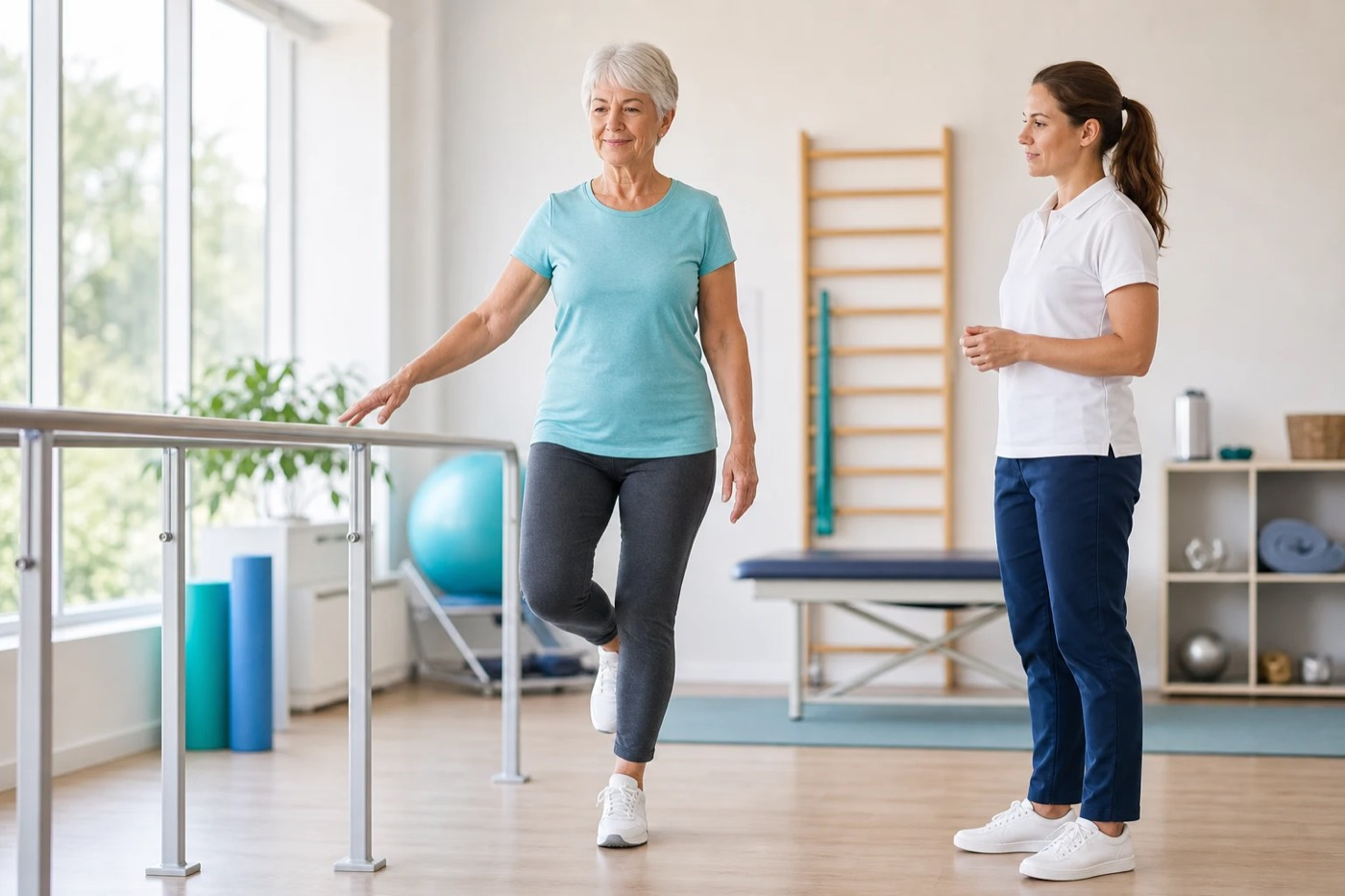
APARC's advanced balance training system provides real-time feedback to help older adults improve postural stability and significantly reduce fall risk.
Wear Proper Footwear — Always
Footwear is often underestimated as a fall risk factor. The ideal footwear for fall prevention has: a non-slip sole, a low heel (less than 2.5cm), a firm heel counter (not backless slippers), secure fastening (laces or Velcro — not slip-ons), and adequate toe width. Walking barefoot or in socks significantly increases fall risk on hard floors. Replace old shoes whose soles have worn smooth. Avoid backless chappals around the house — they are one of the most common fall risks in Indian households.
Have Your Vision Checked Annually
Even mild visual impairment doubles fall risk. Cataracts, glaucoma, and age-related macular degeneration all reduce depth perception and peripheral vision — making it harder to navigate steps, uneven surfaces, and obstacles. Annual eye examinations are essential, and new glasses should be worn consistently. Note: when you get new glasses, take extra care for the first week while your eyes adjust — this is a higher-risk period for falls.
Address Foot Pain and Problems
Foot pain from bunions, corns, calluses, ingrown toenails, or peripheral neuropathy directly affects gait and balance. Regular podiatry care, appropriate footwear, and physiotherapy for foot and ankle strength can significantly reduce these risks. If numbness, tingling, or burning in the feet is present, this should be evaluated medically as neuropathy significantly impairs proprioception.
Rise from Bed and Chairs Slowly
Postural hypotension — a sudden drop in blood pressure when standing — is very common in older adults and a leading cause of falls at home. To minimise the risk: sit on the edge of the bed for 30 seconds before standing, hold onto a firm surface when rising from a chair, and avoid getting up quickly during the night. Staying well-hydrated also helps maintain blood pressure stability.
Use Walking Aids Correctly
Walking sticks, walking frames (walkers), and rollators can dramatically reduce fall risk — but only if they are the correct type, correctly sized, and used properly. An incorrectly sized walking stick actually increases fall risk by forcing an unnatural gait pattern. Our physiotherapists assess your specific gait requirements and provide hands-on training with the appropriate walking aid. See our guide on how to use a walker correctly for more detail.
Stay Active — Move More, Not Less
Fear of falling leads many elderly people to reduce their activity — which paradoxically increases fall risk by causing further muscle weakness and reduced balance. Regular physical activity, including walking, yoga, Tai Chi, and swimming, is one of the most powerful fall prevention tools available. Tai Chi in particular has strong evidence for fall prevention, improving balance, coordination, and reaction time.
5 Elderly Balance Exercises to Start Today
🧘 Daily Balance Exercise Programme for Seniors
Perform these exercises daily, near a stable chair or kitchen counter for support. Start at whatever level feels safe.
1. Sit-to-Stand (Chair Squats)
Sit at the front of a sturdy chair, feet flat and slightly apart. Lean forward slightly and slowly stand up without using your hands if possible. Pause standing, then slowly lower back down. This strengthens the quadriceps and gluteal muscles — the most important muscles for fall prevention.
2. Tandem Standing (Heel-to-Toe Balance)
Stand with feet in a heel-to-toe position (right heel touching left toe) next to a counter for support. Hold as long as you can safely. Progress to closing your eyes as balance improves. This challenges the balance system in a safe, controlled way.
3. Single-Leg Standing
Stand on one foot, lightly touching a counter for balance support. Work towards holding without support for 10 seconds. Progress to standing on a folded towel (softer surface) once confident. Single-leg balance directly simulates the balance demand during every step you take.
4. Heel-Toe Walking (Tandem Walking)
Walk in a straight line placing the heel of each foot directly in front of the toes of the other foot — like walking a tightrope. Use a wall for guidance. This improves dynamic balance and challenges the vestibular system.
5. Calf Raises
Stand behind a chair, hands lightly on the back for support. Rise up onto your toes, pause, and slowly lower. Strong calves are critical for balance recovery — they are what allows you to correct a stumble before it becomes a fall.
APARC's geriatric physiotherapy programme combines strength training, balance retraining, and home safety advice to comprehensively reduce fall risk.
How APARC Can Help with Fall Prevention
Our geriatric physiotherapy teams at APARC centres in Paschim Vihar, Janakpuri, Rohini, and across Delhi NCR provide comprehensive fall risk assessment and prevention programmes, including:
- Clinical fall risk assessment using validated tools
- Personalised strength and balance exercise programmes
- Gait analysis and walking aid prescription and training
- Home environment assessment (available through our home physiotherapy service)
- Post-fall rehabilitation to restore confidence and physical function
- Education for both patient and family caregivers
Protect Your Loved One from Falls
Whether you're concerned about your own balance or caring for an elderly family member, APARC's geriatric physiotherapy team provides expert assessment and evidence-based fall prevention programmes — at our centres or in the comfort of home.
📅 Book a Fall Risk AssessmentFinal Word: Prevention Is Far Better Than Recovery
The physical and emotional consequences of a serious fall — a fractured hip, weeks in hospital, months of rehabilitation, loss of independence — are devastating. But most falls can be prevented with the right combination of exercise, home modifications, medication review, and professional physiotherapy support.
Don't wait for a fall to happen. If you or a family member has any of the risk factors described in this article, schedule a physiotherapy assessment today. The investment in prevention pays dividends in years of safe, independent, active life.