
ACNR
Neurorehabilitation
Centre
A dedicated neurological rehabilitation facility — 10,000 sq ft, 40+ specialist technologies, and a full multidisciplinary team at Pitampura.

What is the ACNR Programme?
The APARC Centre for Neurorehabilitation (ACNR) is a purpose-built 10,000 sq ft facility at Parwana Road, Pitampura — offering both residential inpatient and daycare neurological rehabilitation programmes with the highest concentration of neuro tech in North India.
Powered by 40+ specialist technologies and a full multidisciplinary team, ACNR delivers intensive neuroplasticity-driven rehab for stroke, SCI, Parkinson's, TBI, CP, and more.
Residential or Daycare — We Fit Your Needs
Two structured programme types — tailored to your condition complexity, distance, and family situation.
Residential Inpatient Rehabilitation
Stay at ACNR and receive 4–6 hours of intensive daily therapy with round-the-clock nursing and medical care.
Daycare Neurorehabilitation
Arrive in the morning, receive a full structured programme, and return home each evening — same clinical intensity, more flexibility.
Orthopaedic physiotherapy at ACNR. ACNR is built around neurorehabilitation, but it also runs orthopaedic outpatient physiotherapy — so back, neck, joint and post-surgical problems can be assessed and treated here too. Call +91 98715 76849 to book.
Neurological Conditions We Treat
Deep clinical expertise across the full spectrum of neurological conditions — from acute post-stroke to long-term progressive diseases.
Stroke & Hemiplegia
Intensive early and late-stage stroke rehabilitation — movement, speech, balance and independence through neuroplasticity protocols.
Spinal Cord Injury
Complete and incomplete SCI rehab — maximising residual function, mobility and independence using robotic, FES and intensive manual therapy.
Parkinson's Disease
LSVT BIG, treadmill cueing and balance training to improve gait, manage freezing, reduce falls and maintain daily function.
Traumatic Brain Injury
Post-TBI rehab addressing motor, cognitive, behavioural and functional deficits — acute to community reintegration.
Cerebral Palsy
Spasticity management, gait retraining and motor function development for children and adults with CP.
Multiple Sclerosis
Relapse and progressive MS management — fatigue education, spasticity treatment, balance training across all EDSS levels.
Guillain-Barré Syndrome
Progressive GBS recovery from ICU through to community — weakness, sensory changes and respiratory sequelae.
Peripheral Neuropathy
Diabetic, chemo-induced and idiopathic neuropathy — pain management, sensory re-education and balance restoration.
40+ Technologies at APARC Health & Motion
The highest concentration of neurological rehabilitation technology in North India — enabling treatments not available elsewhere in the region.
Robotic Hand & Arm Training
Task-specific repetitive robotic assistance for upper limb motor relearning post-stroke and SCI
Mobil-L Robotic VR System
VR combined with movement retraining for upper limb recovery and spatial cognition
GAIT ON 3D Analysis
Real-time 3D gait analysis measuring step symmetry, stride length, velocity and biomechanical parameters
TMS — Transcranial Magnetic Stimulation
AE-TMS-03 triple-function system for neuroplasticity augmentation and motor cortex stimulation
Virtual Reality Therapy
Immersive VR environments for balance training, coordination, cognitive rehab and patient motivation
Neuro Treadmill — K POWER
Specialised neurological treadmill with body weight support harness for safe gait retraining
EMG Biofeedback System
Myopluse biofeedback for voluntary motor reactivation and neuromuscular re-education
Dynamic Arm Support
Gravity-compensated bilateral arm relearning system for severe upper limb weakness
Complete Equipment List at ACNR
Multidisciplinary Rehabilitation Team
Every patient is cared for by a full specialist team — not a single therapist. Each discipline brings essential expertise to your recovery.
Physiotherapy
Lead clinical discipline — movement, gait, balance, strength and function restoration
Occupational Therapy
Daily living skills, upper limb function, adaptive equipment and return to work/school
Speech & Language
Dysphasia, dysarthria, swallowing disorders and communication rehabilitation
Neuropsychology
Cognitive assessment, memory, attention, mood and behaviour management
Nursing & Medical
24/7 qualified nursing, daily medical review and medication management
Dietetics
Nutritional assessment, dysphagia diet planning and weight management
This is a multispeciality rehabilitation centre, and one of four APARC centres that also provide specialised neurological rehabilitation with advanced facilities.
Equipment varies between centres. Please call before you travel if you need a specific treatment.
APARC Advanced Neurorehabilitation Centre. This is one of four APARC centres designated for specialist neurorehabilitation, offering advanced neurological assessment, technology-assisted rehabilitation and a multidisciplinary team for stroke, spinal cord injury, brain injury and Parkinson's — alongside the centre's full range of physiotherapy and rehabilitation services. About our neurorehabilitation service.
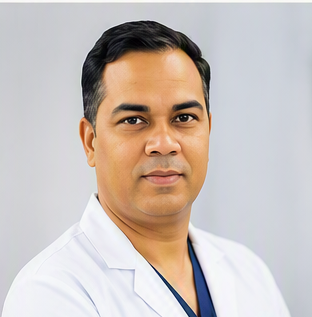 Dr Satish Kumar (PT) — Director & Head of Department, MPT Sports Medicine
 Dr Harshita Sharma (PT) — Chief Physiotherapist, MPT
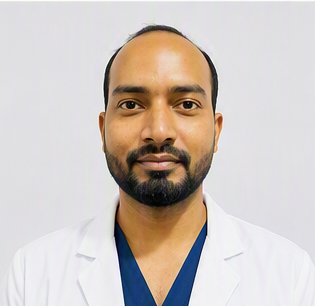 Dr Anup Kumar (PT) — Physiotherapist, BPT
How the ACNR Programme Works
Initial Enquiry
Call our helpline or submit an online enquiry. We discuss your condition and the right programme.
Admission Assessment
Comprehensive neurological assessment using standardised outcome measures to set your baseline and goals.
Personalised Plan
MDT agrees your individualised programme — daily timetable, therapy goals and family involvement plan.
Intensive Rehab
4–6 hours of structured daily therapy using our full 40+ technology suite and MDT support.
Progress Reviews
Weekly MDT reviews and outcome re-measurement — transparent reporting to patient and family.
Discharge & Follow-up
Home programme, caregiver training, outpatient booking and community reintegration support.
What Our Patients Achieve
Recovery milestones that were once considered impossible — because neuroplasticity means improvement is always possible with the right intensity and technology.
Walking Again
From wheelchair to independent walking — gait retraining with robotic support helps patients regain mobility even years post-injury.
72%of stroke patients improve walking functionHand & Arm Function
Repetitive robotic and task-specific training drives motor cortex reorganisation — restoring hand function for daily tasks and self-care.
65%report significant upper limb improvementCognitive Recovery
Post-stroke and TBI cognitive rehab — attention, memory, executive function and communication through structured neuropsychology.
80%show measurable cognitive gainsIndependent Living
Returning home and resuming daily activities — measuring success through Barthel ADL scores and FIM improvement.
88%achieve improved daily independenceRecovery at ACNR — In Their Own Words
"My daughter had severe balance issues after a TBI. The guidance of Dr. Dharam Pandey and the whole ACNR team gave us confidence we were in the right place. The improvement has been remarkable — she is walking independently now."
"After my spinal cord injury I had lost all hope. The ACNR team worked tirelessly with me. The robotic training and constant motivation from the team changed my life. I never expected to stand again."
"My father had a major stroke. We came for the daycare programme and the difference was visible from week two. The VR therapy and gait training were things we had never seen anywhere else in Delhi."
"The personalised approach at APARC made a significant difference in my recovery that I did not find anywhere else in Delhi. The technology, the team, the commitment — everything is exceptional."
Frequently Asked Questions
How to Reach ACNR
Location & Contact
Zone H-4, Plot 5-7, Parwana Road,
Pitampura, New Delhi — 110034
Mon–Sat: 9:00 AM – 8:00 PM · Sun: Closed
Residential patients: 24/7 nursing on-site
Pitampura Station — Yellow Line · 5 min by auto from exit 2
Well connected from Rohini, Shalimar Bagh, Ashok Vihar, Punjabi Bagh and North Delhi
ACNR — Zone H-4, Plot 5-7
Parwana Road, Pitampura, New Delhi 110034 Get DirectionsMore About ACNR Pitampura
The APARC Centre for Neurorehabilitation (ACNR) at Zone H-4, Plot 5-7, Parwana Road, Pitampura is our dedicated neuro-rehabilitation facility - offering inpatient residential rehabilitation with 24-hour nursing alongside daycare and outpatient neuro programmes.
We regularly see patients from Pitampura, Shalimar Bagh and Ashok Vihar locally, with residential admissions from across Delhi NCR.
Conditions We Treat in Pitampura
Back and neck pain. Most back and neck pain is mechanical, and it usually responds to assessment-led treatment rather than prolonged rest. Your physiotherapist examines how your spine moves, identifies what is provoking the pain, and combines hands-on treatment with graded exercise to restore movement. Where symptoms travel into a limb - as in sciatica or a nerve-related neck problem - the assessment looks at nerve involvement as well as the joint itself.
Knee, shoulder and joint pain. Knee pain, frozen shoulder, arthritis and tendon problems each behave differently, so treatment starts with working out which structure is involved and at what stage. Frozen shoulder in particular moves through distinct phases, and the right exercise for one phase is the wrong exercise for another - which is why a stage-matched programme matters more than a generic exercise sheet.
Stroke, paralysis and neurological recovery. Neurological physiotherapy focuses on retraining movement - balance, walking, and use of the affected arm or hand - through repeated, task-specific practice. Programmes are built around what the person needs to do day to day, and progress is reviewed and adjusted as ability changes. Family members are shown how to support practice safely between sessions.
Recovery after surgery. After joint replacement, spinal surgery or ligament repair, rehabilitation follows the stages your surgeon has set out - protecting the repair early on, then rebuilding range of movement, strength and confidence. Starting at the right time and progressing at the right pace both matter.
Sports injuries. Assessment, rehabilitation and a structured return to training, with the final stages testing whether the injured area can handle the demands of your sport before you go back to it.
Women's health, children and older adults. Includes pelvic floor and antenatal or postnatal rehabilitation, paediatric physiotherapy, and geriatric care with a particular focus on balance and reducing the risk of falls.
What Happens at Your First Visit
A first appointment is mainly an assessment. Your physiotherapist takes a history of the problem, examines movement and strength, and explains what they think is going on in plain language. Treatment usually begins in the same session, and you leave with a home exercise programme and a clear idea of what the next few weeks involve.
Bring any recent scans, X-rays or reports if you have them, along with a list of current medication. Wear or bring loose clothing that allows the affected area to be examined and moved. No referral is needed - you can book directly.
How many sessions you need depends on the condition and how it responds, so your physiotherapist will give you a realistic view after the assessment rather than before it. Current session fees are confirmed when you book.
Physiotherapy at Home in Pitampura
Travelling is difficult for many patients after a stroke, after surgery, or in later life. APARC physiotherapists also visit patients at home in and around Pitampura, Shalimar Bagh and Ashok Vihar locally, with residential admissions from across Delhi NCR, delivering the same assessment and treatment plan in your own space and setting up the home environment to support safe practice between visits.
Planning Your Visit
We are open Monday to Saturday, 9:00 AM to 5:00 PM (closed on Sundays). To book an assessment, call +91 98715 76849 or use the booking button above. For driving directions, open our location in Google Maps.
Why Choose APARC in Pitampura
- Part of APARC's 12 centre network across Delhi NCR, Gurugram and Pune
- Qualified BPT/MPT physiotherapists following evidence-based protocols
- Access to advanced rehabilitation technology — availability varies by centre, so please ask when you book
- Clinic, hospital-bedside and home physiotherapy options
- Assessment-led treatment, with a home programme you leave with on day one
Frequently Asked Questions
What physiotherapy services does APARC offer in Pitampura (ACNR)?
How do I book a physiotherapy appointment at APARC Pitampura (ACNR)?
Do you provide home physiotherapy near Pitampura (ACNR)?
What conditions are treated at the Pitampura (ACNR) centre?
Does APARC Pitampura (ACNR) treat stroke and neurological conditions?
We use Google Analytics to understand how visitors use this website. It is not used for advertising and it never sees your medical information. Analytics stays off unless you agree. See our Privacy Policy.